

Coconut peat brick baler sawdust coir block machine baling wood chips China
Apply : including coconut coir, coconut fiber, wood chips, wood shavings, wood powder, rice husks, corn stalks, cottonseed hulls, and peanut shells. It is also highly effective for handling various soft or powdery waste materials, such as waste cotton, used clothing, glass wool, and copper scraps etc.
Brick dimension: Length: 300 – 700 mm Width: 300 – 700 mm Height:Adjustable
Original: China Coconut peat brick baler
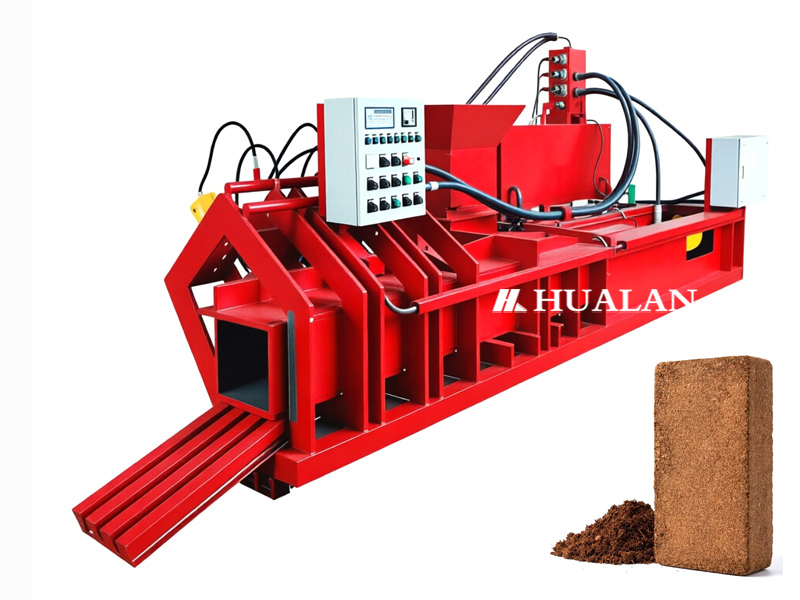
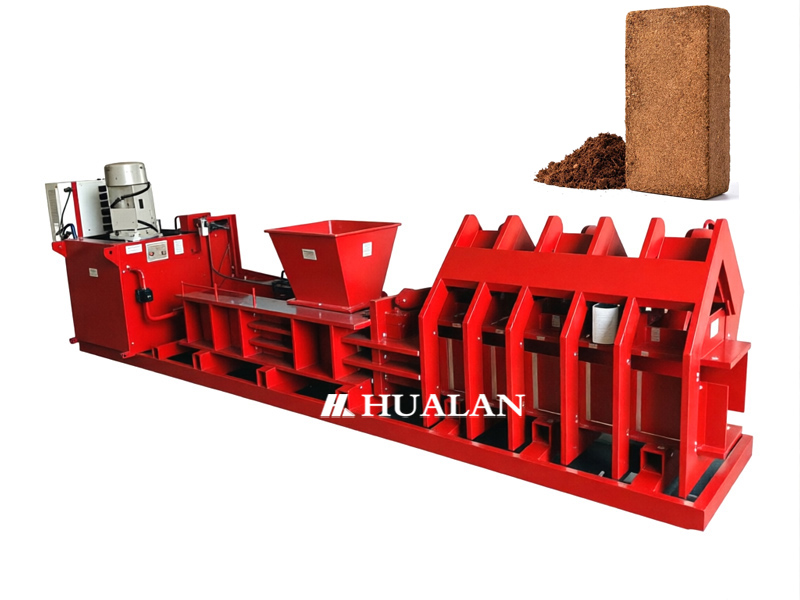
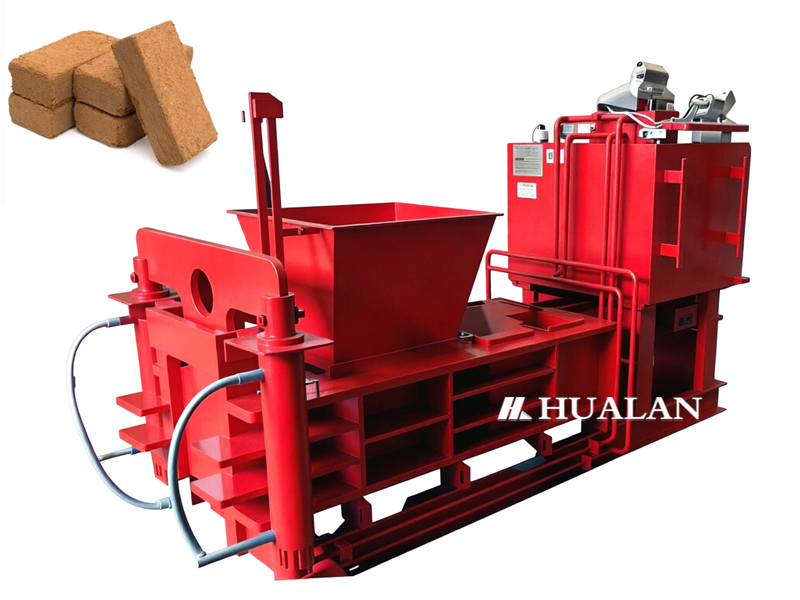
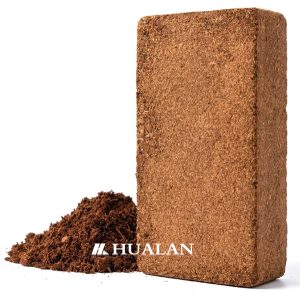
Coconut coir baling machine (also known as a coir brick machine) is a specialized piece of industrial equipment designed to compress loose materials, such as coconut coir and coconut shell powder, into neat, compact coconut coir bricks through high-pressure compression.
Working principle
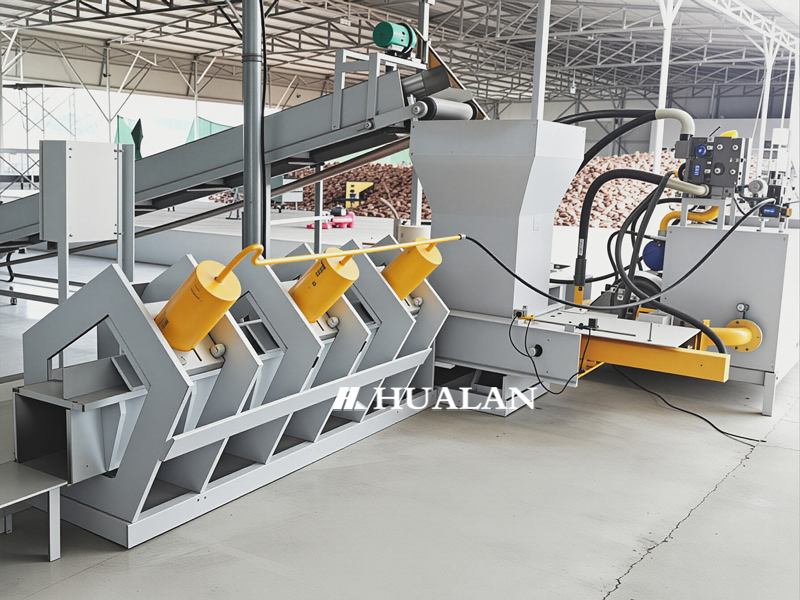
Workflow: The crushed coconut coir is automatically fed into the hopper via a conveyor. A hydraulic cylinder then generates immense pressure (typically ranging from dozens to over a hundred tons) to compact the material inside the compression chamber, finally pushing the formed coconut coir brick out through the mold.
Automation Level: Modern equipment mostly supports fully automatic operation, where the entire process from feeding and compression to package ejection can be completed with a single button press. Some high-end production lines can even achieve automatic bagging, sealing, and robotic palletizing, which greatly reduces labor costs.
Features of the baler
The entire compression process requires no added water or binders. This not only preserves the natural properties of coconut coir as a planting substrate but also avoids secondary pollution, making the finished product ready for direct use in agriculture and horticulture.
The machine features a flexible design. By simply changing the molds, it can produce products in various shapes and sizes. In addition to standard square coir bricks, it can also produce round coir discs, long planting strips, and more, meeting the diverse needs of different markets and customers.
Compressing loose coconut coir into dense bricks drastically reduces the volume, making storage and long-distance transportation much easier while significantly cutting logistics costs. For end-users, the coir bricks are lightweight and easy to handle—they expand rapidly just by soaking in water, offering extreme convenience.
The equipment is typically equipped with automatic feeding and hydraulic systems, enabling continuous and highly efficient automated production. This greatly boosts production efficiency, making it perfectly suited for large-scale and industrial manufacturing scenarios.
How to choose a suitable coconut baler?
1. Compression Density & Moisture Requirements
Moisture Control: This is the key to successful baling. The material’s moisture content should typically be controlled at around 12%-15%. If the moisture is too high, the compressed blocks can easily become loose or develop mold; if it is too low, there will be excessive dust, making it difficult to form solid blocks.
Density: A high-quality baling machine can compress loose coconut coir to a density of 300-500 kg/m³, reducing the volume by approximately 5-8 times, which drastically lowers transportation costs.
2. Hydraulic & Electrical System Configuration
Hydraulic System: As the core power source, high-end models typically adopt branded hydraulic pumps (such as Beijing Huade) and cylinders to ensure stable pressure and prevent oil leakage.
Electrical Components: It is recommended to check whether well-known brands (such as Siemens motors, Schneider Electric) are used. This directly affects the stability and durability of the equipment’s operation, especially since the coconut coir processing environment is typically very dusty.
3. Baling & Forming Methods
Bagged Baling: Some models (such as the HBA-B120) require manual or mechanical assistance to place woven bags for compression. This method produces neatly packaged blocks but consumes packaging bags.
Naked Block Baling: The material is compressed directly into solid blocks without bags. This method has extremely high requirements for the material’s stickiness and moisture content, but it saves on packaging costs.
4. Level of Automation
“One-Push” Design: Advanced designs adopt a “one-push” concept, meaning only one block is ejected at a time. This ensures that every block has highly consistent dimensions and weight, solving the problem of uneven block sizes found in traditional machines.
Automatic Conveying: Large-scale production lines are usually equipped with automatic feeding conveyors, which reduce the labor costs associated with manual shoveling.
What can be used after baler
1.Agriculture & Horticulture:
This is the primary application. The molded “coconut coir bricks” or blocks serve as a premium soilless cultivation substrate. Thanks to their excellent water retention and breathability, they are widely used for planting and seedling cultivation of flowers, vegetables, and fruits.
2.Industrial Fuel:
The compressed blocks have a high density and can be used as biomass fuel for industrial boilers or power plants, serving as a partial substitute for coal.
3.Logistics & Transportation:
Baling significantly reduces the volume of the material, which drastically improves transportation efficiency and cuts down on long-distance shipping costs.